
Loans play a significant role in personal finance, helping individuals and businesses achieve essential goals such as buying a home, funding education, expanding a business, or managing unexpected expenses. When managed well, loans can support wealth creation. When misused, they can lead to financial stress.
This comprehensive guide covers everything you need to know about loans—how they work, their types, advantages, disadvantages, and strategies to borrow smartly.
1. What Is a Loan?
A loan is an agreement where a lender provides money to a borrower, who repays it over time, usually with interest. A typical loan includes:
Principal: The amount borrowed
Interest: The cost of borrowing
Tenure: The duration for repayment
EMI structure: Monthly or periodic payments
Terms and conditions: Fees, rights, and obligations
Understanding these components is essential before choosing any loan.
2. Why People Take Loans
Loans can support a wide range of personal and financial needs:
✔ Major Life Goals
Buying a home
Higher education
Starting or expanding a business
✔ Lifestyle & Personal Needs
Vehicles
Marriage expenses
Home renovation
✔ Emergencies
Medical expenses
Temporary cash flow gaps
✔ Debt Consolidation
Combining multiple high-interest debts into one structured loan.
Loans can be beneficial when they align with meaningful financial goals and fit well within a person’s cash flow.
3. Types of Loans in India
Loans in India broadly fall into two categories: secured and unsecured.
A. Secured Loans
These loans require collateral such as property, gold, or deposits. They typically offer lower interest rates.
1. Home Loan
Collateral: Property
Tenure: Up to 30 years
Interest: ~8.40%–15%
Covers 80%–90% of property value
2. Gold Loan
Secured by gold jewellery
Quick disbursal
Interest: 8%–18%
3. Vehicle Loan
For cars, two-wheelers, or electric vehicles
Financing: Up to 85% of the on-road price
4. Loan Against Property (LAP)
Up to 75% of the property value
Lower rates compared to personal loans
5. Loan Against Securities
Borrow without selling shares, mutual funds, or insurance policies
Loan: 65%–85% of NAV
6. Loan Against Fixed Deposit
Up to 90–95% of the FD value
Low interest rate
7. Loan Against EPF/PF
Allowed for specific purposes like home purchase, medical needs, and marriage
B. Unsecured Loans
These do not require collateral and therefore have higher interest rates.
1. Personal Loan
For any personal need
Interest: ~8%–15%
Tenure: 1–5 years
2. Credit Card Loan
Instant loans based on a credit limit
Interest: Can go up to 53% p.a.
3. Education Loan
Covers tuition, living expenses, books, and travel
Interest: 8%–16%
Moratorium allowed
4. Business Loan (Unsecured)
For working capital or expansion
Eligibility based on revenue & credit profile
5. Payday Loan
High-cost, short-duration loans
Interest: 1%–15% per day
High risk, often predatory
6. Flexi Loans
Overdraft/credit line facility
Interest is charged only on the amount used
4. Advantages of Bank Loans
✔ Access to significant funds
Suitable for significant investments, such as homes or businesses.
✔ Lower and more stable interest rates
Especially compared to credit cards or informal lending.
✔ Flexible repayment options
Borrowers can choose short or long tenures based on affordability.
✔ Potential tax benefits
Home loan interest & principal deductions
Education loan interest deductions
Business loan interest deductions
5. Disadvantages of Bank Loans
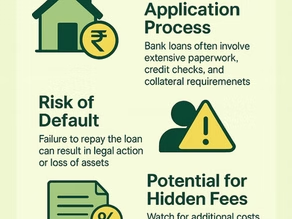
✘ Strict application process
Requires documentation, credit checks, and sometimes collateral.
✘ Risk of default
Missing EMIs may result in legal action or the seizure of assets.
✘ Additional charges
Processing fees, penalties, and foreclosure charges can increase the total cost.
✘ Impact on credit score
Hard inquiries reduce your score temporarily.
Missed EMIs cause long-term credit damage
6. How to Choose the Right Loan
Smart borrowing involves evaluating:
1. Purpose of the loan
Does it create value or fulfil a necessary goal?
2. Interest rate structure
Fixed or floating—choose based on affordability and market trends.
3. Total loan cost
Consider fees, tenure, EMI, and prepayment charges.
4. EMI affordability
Ideally, EMIs should not exceed 30%–40% of monthly income.
5. Credit score
A higher score ensures better loan offers.
6. Tenure selection
Longer tenure = lower EMI but higher total interest paid.
7. Lender reputation
Prefer regulated & transparent institutions.
7. Smart Borrowing Tips
✔ Compare interest rates across lenders
✔ Maintain a good credit score
✔ Don’t borrow for unnecessary expenses
✔ Keep EMIs manageable
✔ Create an emergency fund
✔ Read all terms carefully
✔ Avoid high-cost loans
✔ Prepay when possible to reduce interest burden
8. When Should You Avoid Taking a Loan?
Avoid borrowing when:
✘ It’s for lifestyle indulgence
✘ Income is unstable
✘ The existing debt burden is high
✘ The credit score is weak
✘ A loan pushes your finances into stress
Final Thoughts: Borrowing Is a Tool — Use It Wisely
Loans themselves are not good or bad. Their impact depends on how and why they are taken. Used responsibly, loans can help build assets, improve lifestyle, support education, and grow wealth. Used poorly, they can create long-term financial pressure.
Smart borrowing is about:
Understanding your needs
Choosing the right loan type
Managing repayment discipline
Avoiding unnecessary debt
With the proper knowledge and planning, loans can support a stronger, more secure financial future.